Murchison Falls National Park
WRITTEN BY
Shoebill Watch Team
DATE
November 9, 2026
Murchison Falls National Park, Uganda: Complete Guide to Wildlife Safaris, Birdwatching and the Nile River
The Nile moves quietly through the savannah before reaching one of the most dramatic points on its journey through Uganda. Here, the river is forced through a narrow opening in the rocks, plunging into a turbulent pool below. The sound of rushing water fills the air, mist rises above the gorge, and the surrounding landscape seems to shake with the force of the falls.
This is Murchison Falls, the natural landmark that gives Uganda's largest national park its name.
But the waterfall is only part of what makes Murchison Falls National Park special. Beyond the gorge lies a vast landscape of open grasslands, riverine woodland, Borassus palms, wetlands and forests supporting an impressive variety of wildlife.
Elephants move through the savannah, Rothschild's giraffes browse among the trees, buffaloes gather near water, and lions search for prey across the northern plains. Along the Nile, hippos rest in the shallows, crocodiles bask on the banks, and waterbirds gather in remarkable numbers.
For birdwatchers, Murchison Falls offers another attraction: the possibility of finding the elusive shoebill in the wetlands of the Nile Delta, where the Victoria Nile approaches Lake Albert.
Whether you are planning a traditional Uganda wildlife safari, a specialist birdwatching trip or a journey combining gorilla trekking with savannah wildlife, Murchison Falls National Park deserves a place on your itinerary.
This guide explores the park's wildlife, birding habitats, safari activities, accommodation areas, best times to visit and everything you should know before travelling.
Where Is Murchison Falls National Park Located?
Murchison Falls National Park is located in northwestern Uganda, approximately 300 kilometres by road from Kampala to the general park area, although the actual distance depends on the entrance gate and destination within the park.
The park stretches across the northern end of the Albertine Rift Valley, where the Victoria Nile flows westward towards Lake Albert.
Covering approximately 3,840 square kilometres, Murchison Falls is Uganda's largest national park.
Its landscape includes open savannah grasslands, wooded plains, riverine forests, wetlands and sections of tropical forest. These different habitats support a wide range of mammals, birds, reptiles and other wildlife.
The Victoria Nile divides the park into northern and southern sections.
The northern sector is particularly well known for its game-viewing plains, while the southern side includes forested habitats, access routes to the waterfall and connections towards Budongo Forest.
Murchison Falls National Park forms part of the wider Murchison Falls Conservation Area, which also includes neighbouring protected landscapes such as Bugungu and Karuma wildlife reserves.
The park can be reached by road from Kampala or Entebbe, with several entrance gates serving different areas.
Why Is Murchison Falls National Park Famous?
Murchison Falls National Park is best known for its powerful waterfall, abundant savannah wildlife and exceptional Nile River scenery.
At the waterfall, the Victoria Nile is compressed through a rocky gap approximately seven metres wide before dropping about 43 metres.
The combination of water pressure, sound and spray makes the falls one of Uganda's most impressive natural attractions.
The park is also one of the country's leading destinations for traditional African wildlife safaris.
Visitors can explore the northern savannah on guided game drives, take boat excursions along the Nile and search for birds in a variety of habitats.
Unlike Uganda's mountain rainforest destinations, Murchison Falls offers extensive open landscapes where large mammals can often be observed from safari vehicles.
The Nile adds another dimension to the experience, providing opportunities to see wildlife gathering along the riverbanks.
For specialist birdwatchers, the park is especially appealing because of its diversity of habitats, from savannah and woodland to riverine vegetation and papyrus wetlands.
The History of Murchison Falls National Park
Murchison Falls has a long history as one of Uganda's most important protected landscapes.
The area was established as a national park in 1952, making it one of the country's oldest national parks.
Its wildlife populations have experienced significant changes over the decades.
During periods of political instability and widespread poaching in the 1970s and 1980s, many large mammal populations suffered serious declines.
Subsequent conservation efforts, improved park management and anti-poaching programmes have helped several wildlife populations recover.
Today, Murchison Falls remains an important conservation landscape, although its ecosystems continue to face challenges from habitat pressures, illegal wildlife activities and development.
The park's history is also closely connected to the Nile River, which has shaped its landscapes, wildlife habitats and tourism activities.
Wildlife in Murchison Falls National Park
Murchison Falls is one of Uganda's most rewarding destinations for viewing large African mammals.
Its savannah landscapes provide habitats for elephants, giraffes, buffaloes, lions, antelopes and numerous smaller animals.
Wildlife sightings vary according to the season, weather, location and time of day, but game drives and boat excursions offer excellent opportunities to observe the park's animals.
African Elephants
Elephants are among the most impressive animals found in Murchison Falls National Park.
They can be encountered moving through open grasslands, browsing among trees or gathering near the Nile River.
Watching a family group of elephants provides an opportunity to observe their social behaviour, including the interactions between adults and young calves.
Elephants are often particularly interesting photographic subjects when seen against the park's open landscapes or near the river.
Rothschild's Giraffes
Murchison Falls is one of Uganda's important strongholds for the northern giraffe, including the population traditionally referred to as Rothschild's giraffe.
These tall mammals are frequently associated with the park's northern savannah, where they browse on trees and shrubs.
Their distinctive markings and graceful movements make them a favourite among wildlife photographers.
Early morning game drives can provide beautiful opportunities to photograph giraffes moving through the grasslands.
African Lions
Lions inhabit the savannah areas of Murchison Falls, particularly where suitable prey is available.
They may be encountered resting in the shade, moving through grassland or watching herds of antelopes.
Because lions are wild predators with large territories, sightings are never guaranteed.
Experienced safari guides use their knowledge of the park, animal behaviour and recent observations to search suitable habitats.
African Buffaloes
Large herds of African buffaloes are a familiar sight in Murchison Falls.
They can be found grazing in open grasslands, resting near water or moving between feeding areas.
Buffaloes are powerful animals, and visitors should always observe them from a safe distance.
Leopards
Leopards occur in the park but are generally more difficult to observe than many other large mammals.
Their solitary behaviour, camouflage and preference for cover make sightings unpredictable.
A leopard resting in a tree or moving through woodland can be a particularly rewarding encounter for patient wildlife enthusiasts.
Uganda Kob and Other Antelopes
The Uganda kob is one of the park's characteristic antelope species.
These reddish-brown antelopes are frequently encountered on the northern plains and are an important prey species for lions and other predators.
Other antelopes found in the park include Jackson's hartebeest, oribi, waterbuck and bushbuck.
Hippos and Nile Crocodiles
The Nile River supports substantial populations of hippos and Nile crocodiles.
Hippos are commonly seen resting in groups in the water, with only their heads and backs visible above the surface.
Crocodiles may be observed basking along the banks or resting close to the water.
A boat safari provides one of the best opportunities to observe these animals in their natural river habitat.
Other Mammals
Additional wildlife in Murchison Falls includes spotted hyenas, warthogs, olive baboons, patas monkeys and various smaller mammals.
Primates are more likely to be encountered in forested and woodland habitats than on the open savannah.
The diversity of mammals makes Murchison Falls suitable for both first-time safari travellers and visitors with a particular interest in wildlife photography.
Game Drives in Murchison Falls National Park
Game drives are one of the main activities in Murchison Falls National Park.
Most traditional wildlife viewing takes place across the northern savannah, where open plains and woodland habitats provide opportunities to observe large mammals.
Safari vehicles follow established tracks through different wildlife habitats while guides search for animals and explain their behaviour.
Morning Game Drives
Early morning is often an excellent time for wildlife viewing.
Temperatures are cooler, and many animals are active before the heat of the day.
Lions may still be moving after the night, giraffes browse among the trees, and antelopes graze across the plains.
The softer morning light also creates attractive conditions for photography.
Afternoon Game Drives
Afternoon game drives offer opportunities to explore additional areas of the park.
Although wildlife activity may be reduced during the hottest hours, animals can still be found near water, beneath trees and in suitable feeding areas.
Late afternoon light can be especially beautiful across the grasslands.
The Buligi Game-Viewing Area
The Buligi area is one of the park's best-known game-drive regions.
Located in the northern sector, it includes savannah, woodland and landscapes influenced by the Nile and Lake Albert.
The area is associated with sightings of giraffes, elephants, buffaloes, antelopes, lions and numerous birds.
Wildlife movements change throughout the year, so your guide may recommend different tracks depending on current conditions.
How Long Does a Game Drive Take?
A typical game drive may last approximately three to four hours, although longer excursions can be arranged.
The ideal duration depends on the route, wildlife activity and your interests.
Photographers and dedicated wildlife enthusiasts may prefer additional time to observe animal behaviour rather than moving quickly between sightings.
The Murchison Falls Waterfall: Where the Nile Forces Its Way Through the Rocks
The waterfall is the park's defining natural feature.
At this point, the Victoria Nile narrows dramatically before plunging into the gorge below.
The water crashes through the rock opening with enormous force, creating a constant roar and clouds of spray.
Visitors can experience the falls from different perspectives.
Viewing Murchison Falls from the River
One of the most popular ways to experience the waterfall is through a boat excursion upstream from the Paraa area.
The boat follows the Nile towards the base of the falls, passing riverbanks where wildlife is frequently observed.
As the boat approaches the gorge, the sound of the waterfall becomes louder and the surrounding landscape changes.
The boat normally stops at a safe viewing distance, allowing passengers to appreciate the power of the falls.
The exact approach depends on water conditions and operating arrangements.
Visiting the Top of Murchison Falls
The top of the falls offers a different experience.
Here, visitors can watch the Nile being forced through the narrow rocky channel before dropping into the gorge.
The viewpoints reveal the tremendous power of the river and provide opportunities for landscape photography.
Visitors should remain within designated viewing areas and follow park safety instructions, as the rocks can be wet and slippery.
Why the Waterfall Is Worth Visiting
The falls are more than a scenic stop.
They demonstrate the extraordinary force of the Nile and the geological landscape through which the river flows.
Even travellers who have visited other African waterfalls often find Murchison Falls distinctive because of the narrow channel through which such a large volume of water passes.
Boat Safaris on the Nile River
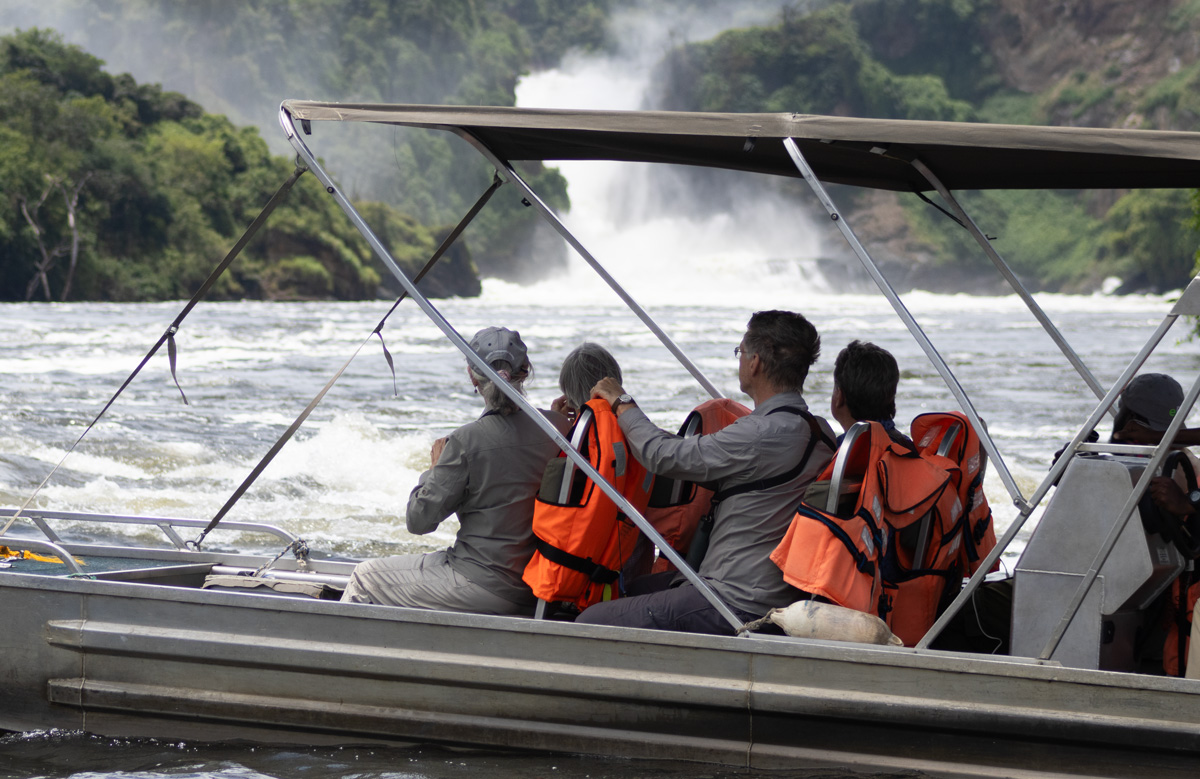
A boat safari is one of the most enjoyable ways to explore Murchison Falls National Park.
While game drives focus on the savannah, boat excursions reveal the wildlife living along the Nile's banks and waterways.
The river attracts numerous animals, particularly during warmer periods when wildlife comes to drink or rest near the water.
Boat Safari to the Bottom of Murchison Falls
The upstream boat excursion towards the waterfall is one of the park's signature activities.
Departing from the Paraa area, the boat travels along the Nile through sections bordered by grassland, woodland and riverine vegetation.
Wildlife sightings may include hippos, crocodiles, elephants, buffaloes and various waterbirds.
African fish eagles can sometimes be seen perched in trees overlooking the river.
Kingfishers, herons, egrets and other birds are also frequently encountered.
The excursion generally takes several hours, depending on the boat service and operating conditions.
Nile Delta Boat Safari
A different boat excursion travels downstream towards the Nile Delta, where the Victoria Nile approaches Lake Albert.
This area is particularly important for birdwatchers because of its wetlands, channels and papyrus vegetation.
The delta is one of the locations in Murchison Falls where visitors may search for shoebills.
Unlike the upstream waterfall excursion, the delta trip focuses more on wetland habitats and birdlife.
It can be especially rewarding for travellers interested in specialist birdwatching and wildlife photography.
Shoebill Watching in the Nile Delta
For many birdwatchers visiting Murchison Falls, the possibility of seeing a shoebill is a major attraction.
The shoebill (Balaeniceps rex) is one of Africa's most unusual wetland birds, recognised by its enormous shoe-shaped bill, grey plumage and distinctive upright posture.
The species inhabits extensive freshwater wetlands, where it hunts fish and other aquatic prey.
Within the Murchison Falls landscape, suitable habitats occur around the Nile Delta near Lake Albert.
What Makes the Nile Delta Suitable for Shoebills?
The delta contains shallow waterways, papyrus vegetation and wetland habitats that can support shoebills.
These environments provide suitable feeding areas and cover.
Shoebills often remain motionless for long periods while watching for prey, which can make them difficult to locate.
Their movements depend on natural conditions, including water levels, feeding opportunities and disturbance.
How Does Shoebill Watching Work?
Shoebill searches in the Nile Delta are generally conducted through guided boat excursions.
A knowledgeable birding guide helps identify suitable areas and scan the vegetation for the birds.
The excursion may also provide opportunities to observe other wetland species.
Visitors should understand that shoebill sightings are not guaranteed.
A shoebill may be located relatively quickly, or it may remain hidden in the wetland.
Mabamba Swamp or Murchison Falls for Shoebill Watching?
Both Mabamba Swamp and the Nile Delta offer opportunities to search for shoebills, but the experiences are different.
Mabamba is particularly convenient for visitors staying near Entebbe and is well suited to a half-day birding excursion.
Murchison Falls offers the opportunity to search for shoebills as part of a broader wildlife safari that includes game drives, Nile boat trips and visits to the waterfall.
Travellers with a strong interest in shoebills may choose to include both destinations in a longer Uganda birding itinerary.
Birdwatching in Murchison Falls National Park
Murchison Falls is one of Uganda's leading destinations for birdwatching in savannah, woodland and riverine habitats.
More than 450 bird species have been recorded in the wider park landscape, making it an important destination for both casual birdwatchers and dedicated birders.
The diversity of habitats is one of its greatest strengths.
Open grasslands support different species from those found in wooded areas, while the Nile and its wetlands attract numerous waterbirds.
Forest habitats around the southern conservation landscape add further variety.
Abyssinian Ground Hornbill
The Abyssinian Ground Hornbill is one of the park's most impressive savannah birds.
This large, mostly terrestrial hornbill is associated with open grasslands and lightly wooded habitats.
Its distinctive appearance, powerful bill and slow movements make it a fascinating subject for observation and photography.
Secretarybird
The Secretarybird is a striking bird of prey associated with open grassland habitats.
Its long legs, upright posture and characteristic head feathers make it easy to recognise when encountered.
It spends much of its time walking through grasslands in search of prey.
Sightings can be unpredictable, making it a particularly rewarding species for birdwatchers.
African Fish Eagle
The African Fish Eagle is one of the most recognisable birds along the Nile.
Its powerful call is often associated with Africa's lakes and rivers.
These eagles may be seen perched in riverside trees or flying above the water in search of fish.
Goliath Heron
The Goliath Heron is the world's largest living heron.
It is associated with rivers, lakes and wetlands, where it hunts fish in shallow water.
Its large size and reddish-brown colouring make it a memorable bird to observe during a Nile boat excursion.
Saddle-billed Stork
The Saddle-billed Stork is another impressive wetland species that may be encountered along suitable waterways.
Its tall stature and colourful bill make it especially attractive to bird photographers.
Red-throated Bee-eater
Red-throated Bee-eaters are among the colourful birds that can be encountered along the Nile.
They often gather around suitable sandy riverbanks and may be seen making short flights to catch insects.
Their bright plumage and active behaviour make them excellent subjects for photography.
Other Birds to Look For
Birdwatchers may also encounter: Shoebill, African Skimmer, Pied Kingfisher, Giant Kingfisher, Malachite Kingfisher, Grey-headed Kingfisher, Northern Carmine Bee-eater, White-throated Bee-eater, Black-headed Gonolek, Silverbird, Black-billed Barbet, African Darter, White-faced Whistling Duck, Long-toed Lapwing, Black-winged Red Bishop, Various vultures, eagles, herons and egrets
Some species are seasonal, uncommon or restricted to particular habitats.
A specialist birding guide can help visitors identify calls, recognise suitable habitats and locate species that may otherwise be overlooked.
Best Birdwatching Areas in Murchison Falls
The Nile Delta
The Nile Delta is particularly valuable for wetland birds, including the shoebill.
Its channels, papyrus beds and open water attract a range of aquatic species.
A dedicated boat excursion is one of the best ways to explore this habitat.
The Northern Savannah
The northern plains support savannah birds, raptors, hornbills, bee-eaters and grassland specialists.
Birdwatching can be combined with game drives, although dedicated birders may prefer slower routes with more frequent stops.
The Nile Riverbanks
The riverbanks are productive for kingfishers, herons, fish eagles, storks and other water-associated birds.
Boat excursions provide particularly useful viewing opportunities.
Budongo Forest
Budongo Forest lies within the wider Murchison Falls Conservation Area and is an important destination for forest birdwatching.
Its habitats support species different from those found in the open savannah.
Birdwatchers may search for forest specialists such as Chocolate-backed Kingfisher, Nahan's Francolin and other woodland and forest birds, depending on the accessible trail and guiding arrangements.
Budongo is also associated with chimpanzee populations and conservation research.
Budongo Forest and Chimpanzee Trekking
Budongo Forest is an important forest landscape south of Murchison Falls National Park.
It forms part of the wider conservation area and supports chimpanzees, forest birds and numerous other species.
The Kaniyo Pabidi area is particularly associated with guided chimpanzee tracking and forest experiences.
Chimpanzee tracking offers visitors an opportunity to search for these intelligent primates in their natural habitat.
Unlike gorilla trekking in Bwindi, chimpanzee encounters involve a different forest environment and animal behaviour.
Chimpanzees are often more active, vocal and mobile, sometimes moving quickly through the trees.
Sightings and the length of the search depend on the animals' movements and the conditions on the day.
For birdwatchers, Budongo adds valuable forest habitat to a safari otherwise focused on savannah and river wildlife.
Best Time to Visit Murchison Falls National Park
Murchison Falls can be visited throughout the year, but seasonal conditions influence wildlife viewing, road access, vegetation and bird activity.
December to February
These months are generally among the drier periods in northern Uganda.
Vegetation may be less dense in some areas, and wildlife can be easier to observe around suitable water sources.
Road conditions are often more manageable, although weather patterns vary.
June to August
This is another popular period for wildlife safaris.
The generally drier conditions can make game drives more comfortable, and the park's open landscapes provide rewarding opportunities for wildlife viewing.
March to May
Rainfall commonly increases during this period.
The landscape becomes greener, and some tracks may become muddy or difficult to use.
Birdwatching can still be productive, although heavy rain may affect outdoor activities.
September to November
These months often bring additional rainfall, although conditions vary across the park.
The vegetation can be lush, and photographers may enjoy dramatic skies and changing light.
When Is the Best Time for Birdwatching?
Birdwatching is possible throughout the year.
Resident species can be observed in suitable habitats across the seasons, while migratory birds add variety during parts of the year.
Travellers interested in specific species should plan their visits according to the habitats and seasonal patterns relevant to those birds.
For shoebill watching, water levels and local feeding conditions may be more important than simply choosing a dry or rainy month.
How to Get to Murchison Falls National Park
By Road from Kampala or Entebbe
Murchison Falls is commonly reached by road from Kampala or Entebbe.
The journey from Kampala to the park generally takes approximately five to seven hours, depending on the entrance gate, road conditions, traffic and stops.
Visitors travelling from Entebbe should allow additional time.
Several routes lead to different sections of the park, so the best approach depends on your accommodation and planned activities.
Through Masindi
Masindi is a common gateway for visitors approaching the southern side of the park.
The route can provide access towards the waterfall and forested areas of the wider conservation landscape.
Through the Northern Access Routes
Travellers staying in the northern sector may use routes through the Pakwach area and appropriate park gates.
This can be convenient for reaching accommodation near the northern game-viewing plains.
By Domestic Flight
Scheduled or chartered domestic flights may serve airstrips associated with the Murchison Falls area, including Pakuba, Chobe and Bugungu, subject to current services and arrangements.
Road transfers are still required between the airstrip, accommodation and safari activities.
Getting Around the Park
A suitable safari vehicle is recommended for game drives and transfers within Murchison Falls.
Some routes involve gravel tracks and uneven surfaces, particularly after rain.
Access between the northern and southern sections depends on the current bridge, road and park arrangements.
Visitors should confirm their intended route before travelling.
Where to Stay in Murchison Falls National Park
Accommodation in and around Murchison Falls ranges from budget-friendly camps and guesthouses to comfortable safari lodges and luxury properties.
The best location depends on the activities you want to prioritise.
Paraa Area
Paraa is an important tourism hub associated with Nile boat excursions and access to different sections of the park.
Accommodation around this area can be convenient for visitors planning river safaris and game drives.
Northern Savannah Area
Lodges serving the northern sector are particularly convenient for early morning game drives.
Staying close to the main wildlife-viewing areas can reduce transfer time and allow more time in the park.
Southern Sector and Forest Areas
Accommodation in the southern part of the conservation landscape can be suitable for visitors interested in the waterfall, Budongo Forest and chimpanzee tracking.
Choosing the Right Lodge
When selecting accommodation, consider:
- Distance to the main game-drive areas.
- Access to Nile boat excursions.
- Travel time to the waterfall.
- Your preferred accommodation standard.
- Availability of family rooms or private facilities.
- The location of your next safari destination.
A well-positioned lodge can make a significant difference to how much time you spend enjoying wildlife rather than travelling between activities.
How Many Days Do You Need in Murchison Falls?
Two Days
A two-day visit can provide a brief introduction to the park, but travel time may limit the number of activities.
This option is more suitable for travellers with limited time who are comfortable with a busy schedule.
Three Days
Three days is a popular choice for a Murchison Falls safari.
It generally allows time for game drives, a boat excursion along the Nile and a visit to the waterfall, depending on arrival and departure arrangements.
Four to Five Days
A longer stay allows more time for wildlife photography, birdwatching, Nile Delta excursions and forest activities.
Dedicated birdwatchers may particularly benefit from the extra time because they can explore several habitats without rushing.
Wildlife Photography in Murchison Falls National Park
Murchison Falls offers excellent opportunities for wildlife and landscape photography.
Its open savannahs, large mammals, river scenery and changing light create varied photographic conditions.
Early morning game drives can be particularly rewarding for photographing giraffes, antelopes and other mammals against the golden light of the grasslands.
The Nile provides opportunities for photographing hippos, crocodiles, elephants and waterbirds from a boat.
The waterfall itself is an impressive landscape subject, with rushing water, spray and dramatic rock formations.
Photography Tips
A telephoto lens is useful for wildlife and birds, while a wider lens can help capture landscapes and the waterfall.
A camera with good image stabilisation is particularly helpful on boat excursions.
Carry protection for dust and rain, and avoid changing lenses unnecessarily in dusty conditions.
Photographers should never pressure guides to approach animals too closely or leave designated routes.
The most rewarding photographs often come from patience and careful observation.
What to Pack for a Murchison Falls Safari
Packing for Murchison Falls is relatively straightforward, but visitors should prepare for warm weather, outdoor activities and changing conditions.
Useful items include:
- Lightweight clothing in neutral colours.
- A hat and sunscreen.
- Comfortable walking shoes.
- A light jacket for early mornings.
- A rain jacket during wetter periods.
- Binoculars for wildlife and birdwatching.
- A camera with suitable lenses.
- Insect repellent.
- Drinking water.
- Personal medication.
- A small daypack.
- A waterproof cover for electronics.
For boat excursions, follow the operator's safety instructions and wear the provided life jacket.
Visitors should also be prepared for strong sunshine, especially during open-vehicle game drives and river activities.
Conservation in Murchison Falls National Park
Murchison Falls is one of Uganda's most important wildlife conservation landscapes.
Its protected habitats support large mammals, birds, aquatic wildlife and numerous smaller species.
The park also plays an important role in protecting sections of the Nile River ecosystem.
Conservation efforts include wildlife monitoring, anti-poaching activities, habitat management and cooperation with neighbouring communities.
Conservation Challenges
The park faces several ongoing pressures, including:
- Illegal hunting and wildlife trafficking.
- Human–wildlife conflict near protected-area boundaries.
- Habitat disturbance and land-use pressures.
- Invasive species and changes in vegetation.
- Pollution and environmental impacts associated with development.
- Climate variability and changing water conditions.
Protecting the park requires long-term management and cooperation between conservation authorities, local communities and other stakeholders.
Responsible Safari Tourism
Visitors can support conservation by choosing responsible safari operators and following park regulations.
Game drives should remain on permitted tracks, and animals should never be chased, fed or deliberately disturbed.
Boat excursions should maintain safe and respectful distances from wildlife.
Visitors should avoid littering and respect the communities living around the park.
Responsible tourism helps ensure that the park's wildlife and natural landscapes remain protected for future generations.
Combining Murchison Falls with Other Uganda Safari Destinations
Murchison Falls is often included in longer Uganda safari itineraries because it combines well with several other destinations.
Murchison Falls and Ziwa Rhino Sanctuary
Ziwa Rhino Sanctuary is located along a commonly used road route between Kampala and Murchison Falls.
It provides an opportunity to observe rhinos during guided experiences under the sanctuary's current visitor arrangements.
A visit to Ziwa can add another important large mammal encounter to a Murchison Falls safari.
Murchison Falls and Kibale National Park
Kibale National Park is one of Uganda's leading destinations for chimpanzee trekking and forest birdwatching.
Combining Kibale with Murchison Falls allows travellers to experience both savannah wildlife and tropical forest ecosystems.
Murchison Falls and Queen Elizabeth National Park
Queen Elizabeth National Park offers further wildlife viewing, boat excursions on the Kazinga Channel and diverse savannah and wetland habitats.
A safari including both parks provides opportunities to explore different landscapes and wildlife communities.
Murchison Falls and Bwindi Impenetrable National Park
Travellers interested in mountain gorillas can combine Murchison Falls with Bwindi Impenetrable National Park.
This creates a varied Uganda safari featuring elephants, giraffes, lions, Nile River wildlife and gorilla trekking in a mountain rainforest.
Murchison Falls and Mabamba Swamp
For birdwatchers, Mabamba Swamp offers another opportunity to search for shoebills in a different wetland environment.
A safari combining Mabamba and Murchison Falls can include wetland birdwatching, savannah birds, forest species and Nile River wildlife.
Frequently Asked Questions About Murchison Falls National Park
Where is Murchison Falls National Park located?
Murchison Falls National Park is located in northwestern Uganda, along the Victoria Nile as it flows towards Lake Albert.
What is Murchison Falls National Park famous for?
The park is famous for its powerful waterfall, savannah wildlife, Nile River boat safaris and birdwatching opportunities.
What animals can you see in Murchison Falls?
Visitors may encounter elephants, giraffes, buffaloes, lions, Uganda kobs, hartebeests, waterbucks, hippos, crocodiles and numerous other species. Sightings vary according to conditions.
Can you see the Big Five in Murchison Falls National Park?
Murchison Falls supports lions, leopards, elephants and buffaloes, but rhinos are not part of the park's regular wild game-viewing experience. Travellers often combine a visit with Ziwa Rhino Sanctuary to include a rhino encounter.
Can you see shoebills in Murchison Falls?
Yes. Shoebills may be found in suitable wetland habitats around the Nile Delta near Lake Albert. Sightings are not guaranteed.
How many days are enough for Murchison Falls?
Three days is a practical starting point for a safari including game drives, a Nile boat excursion and the waterfall. Birdwatchers and photographers may prefer four or more days.
What is the best time to visit Murchison Falls?
The generally drier periods from December to February and June to August are popular for wildlife safaris, although the park can be visited throughout the year.
How far is Murchison Falls from Kampala?
The journey from Kampala commonly takes approximately five to seven hours by road, depending on the entrance gate, traffic and stops.
Is Murchison Falls good for birdwatching?
Yes. The park and its surrounding conservation landscape support more than 450 recorded bird species across savannah, woodland, riverine, wetland and forest habitats.
Can I take a boat to Murchison Falls?
Yes. Boat excursions operate along the Nile towards the base of the waterfall, subject to current park and operator arrangements.
Is Murchison Falls suitable for wildlife photography?
Yes. The park offers opportunities to photograph large mammals, birds, river wildlife, open landscapes and the waterfall.
Can I combine Murchison Falls with gorilla trekking?
Yes. Many Uganda safaris combine Murchison Falls with Bwindi Impenetrable National Park for mountain gorilla trekking.
Plan Your Murchison Falls Wildlife and Birding Safari with Shoebill Watch
Murchison Falls National Park brings together some of Uganda's most rewarding wildlife experiences.
Few destinations offer such a varied combination of savannah game drives, Nile River boat safaris, dramatic waterfall scenery and opportunities to search for the rare shoebill.
At Shoebill Watch, we plan private Uganda wildlife and birding safaris tailored to your interests, available time and travel preferences.
Your journey can focus entirely on Murchison Falls or combine the park with Mabamba Swamp, Kibale National Park, Queen Elizabeth National Park and Bwindi Impenetrable National Park.