Bwindi Impenetrable National Park
WRITTEN BY
Shoebill Watch Team
DATE
November 9, 2026
Bwindi Impenetrable National Park, Uganda: The Complete Guide to Gorilla Trekking, Birding and Wildlife
There is a moment in Bwindi Impenetrable National Park when the forest seems to close around you. The air becomes cooler, the vegetation grows thicker, and the sounds of birds and insects carry through the trees. Somewhere in this vast rainforest, mountain gorillas move through the undergrowth, feeding, resting and raising their young.
For many visitors to Uganda, the chance to see these gorillas is the reason for travelling to Bwindi. Yet the park offers far more than a single wildlife encounter. It is one of Africa's most important tropical forests, a UNESCO World Heritage Site, and an exceptional destination for birdwatching, nature walks and conservation-focused travel.
Located in southwestern Uganda, Bwindi protects a remarkable landscape of steep hills, deep valleys and ancient forest. Its wildlife includes endangered mountain gorillas, chimpanzees, forest elephants, numerous smaller mammals and an impressive diversity of birds.
For birdwatchers, Bwindi is especially important because it supports several species associated with the Albertine Rift, a region known for its distinctive mountain forest biodiversity. For wildlife enthusiasts, it provides an opportunity to explore one of Uganda's richest natural environments.
Whether you are planning your first gorilla trekking safari, searching for rare forest birds or simply hoping to experience Uganda's mountain rainforest, this guide covers what you need to know about visiting Bwindi Impenetrable National Park.
Where Is Bwindi Impenetrable National Park Located?
Bwindi Impenetrable National Park is located in southwestern Uganda, near the borders with the Democratic Republic of the Congo and Rwanda.
The park lies within the Albertine Rift region and covers approximately 321 square kilometres of mountainous forest. Its elevation ranges from roughly 1,160 to 2,600 metres above sea level, creating a varied landscape of lowland and montane forest habitats.
Bwindi extends across parts of Kanungu, Kabale and Kisoro districts, with different access routes leading to its main visitor and gorilla trekking areas.
The forest is surrounded by rural communities, agricultural landscapes and steep hillsides. In some places, cultivated land reaches close to the park boundary, making the contrast between protected rainforest and surrounding settlements particularly striking.
Bwindi can be reached by road from Entebbe or Kampala, by road from Kigali in Rwanda, or through domestic flights to airstrips serving southwestern Uganda.
Because the park is mountainous and its trekking sectors are spread across different locations, visitors should choose accommodation according to the sector assigned on their gorilla trekking permit.
Why Is Bwindi Impenetrable National Park Famous?
Bwindi is internationally known as one of the most important habitats for endangered mountain gorillas.
The park forms part of the greater conservation landscape protecting these remarkable primates, which survive only in a limited area of East and Central Africa.
It is one of two main mountain gorilla population areas, alongside the Virunga Massif, which spans parts of Uganda, Rwanda and the Democratic Republic of the Congo.
Bwindi was gazetted as a national park in 1991 and inscribed on the UNESCO World Heritage List in 1994 in recognition of its exceptional biodiversity and conservation importance.
Its significance extends beyond gorillas. The forest supports hundreds of bird species, numerous butterflies, reptiles, amphibians and a wide variety of plants.
Bwindi is also an important part of the Albertine Rift ecosystem, a region containing species found nowhere else in the world.
The combination of mountain gorillas, rare forest birds, dramatic landscapes and extraordinary biodiversity makes Bwindi one of Uganda's leading wildlife and birdwatching destinations.
Mountain Gorillas in Bwindi Impenetrable National Park
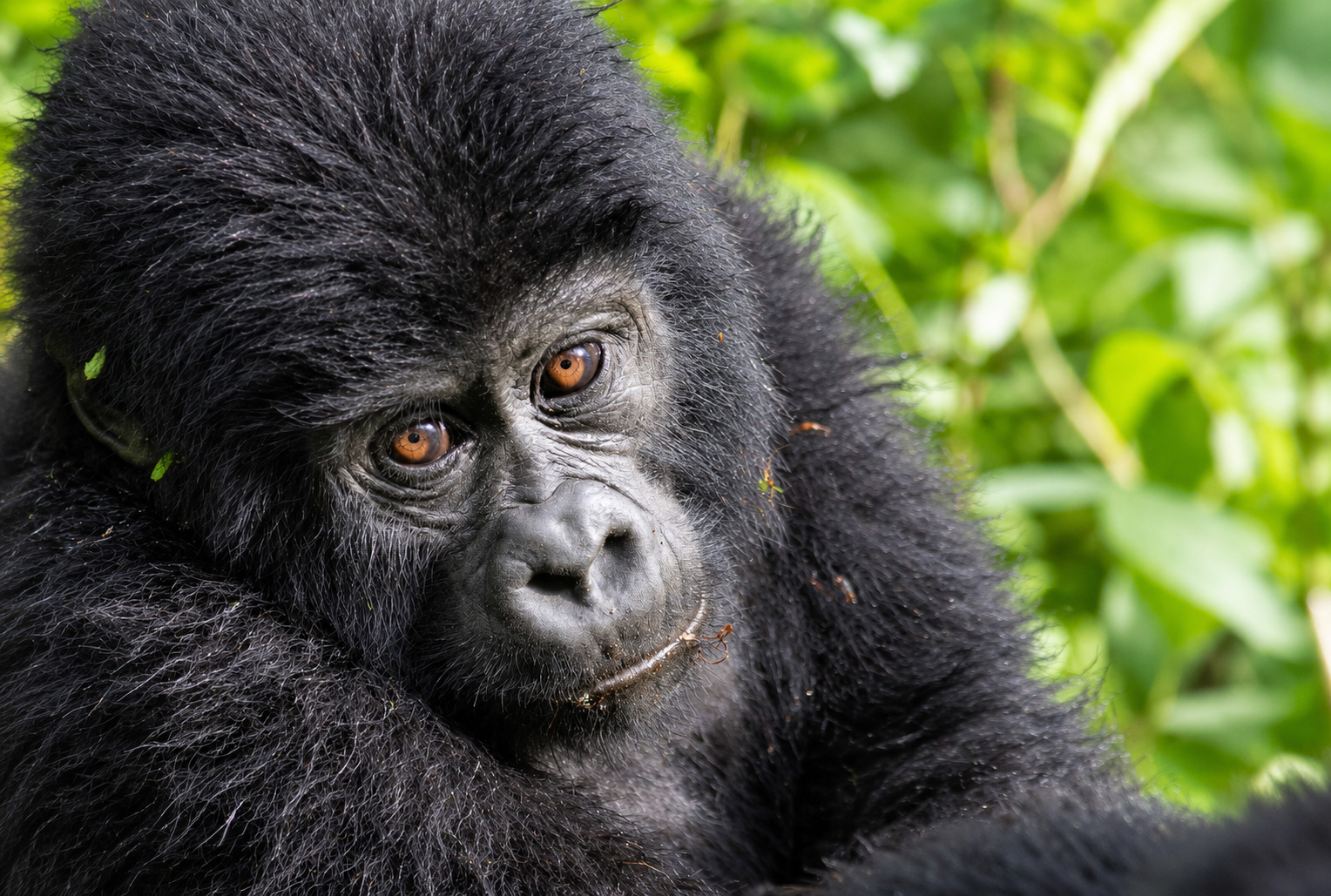
The mountain gorilla (Gorilla beringei beringei) is the park's best-known resident.
These powerful primates live in social family groups led by dominant males, often known as silverbacks because of the silver-grey hair that develops across their backs as they mature.
A gorilla family may include adult females, younger males, juveniles and infants. Their daily activities involve feeding, resting, grooming and moving through the forest in search of vegetation.
Despite their impressive size and strength, mountain gorillas spend much of their time feeding on leaves, shoots, stems and other plant material.
Watching a gorilla family provides an opportunity to observe complex social relationships. Young gorillas may play together while adults feed nearby, and the dominant silverback helps maintain order and protect the group.
Why Are Mountain Gorillas Endangered?
Mountain gorillas have faced serious conservation challenges, including habitat loss, disease, snares and historical poaching.
Their populations have recovered substantially through sustained conservation work, but the species remains endangered and dependent on continued protection.
Conservation programmes involve park authorities, researchers, veterinarians, local communities and tourism stakeholders.
Regulated gorilla tourism is one of the activities that helps generate revenue for conservation and contributes to the economic importance of protecting the forest.
Visitors therefore play a role in supporting conservation when they participate in properly managed gorilla trekking experiences.
Gorilla Trekking in Bwindi: What Is the Experience Like?
Gorilla trekking is the main visitor activity in Bwindi Impenetrable National Park.
The experience begins early in the morning at a designated briefing point, where Uganda Wildlife Authority rangers explain the trekking procedures, safety requirements and rules for observing gorillas.
Visitors are allocated to a habituated gorilla family and accompanied into the forest by trained ranger guides and trackers.
The trek can involve climbing steep hills, walking through thick vegetation, crossing small streams and navigating muddy or uneven forest trails.
Some gorilla families may be located relatively close to the starting point, while others require several hours of walking.
The exact duration depends on the movements of the gorillas, the location of the assigned family, the weather and the terrain.
Finding the Gorillas
The trackers use their knowledge of the forest and information about the gorillas' recent movements to help locate the assigned family.
As you move through the forest, your ranger guide may point out interesting plants, bird calls, animal tracks and signs of other wildlife.
The anticipation grows as the trackers approach the area where the gorillas are believed to be feeding or resting.
Eventually, you may hear movement in the vegetation or catch your first glimpse of a gorilla among the leaves.
Seeing a mountain gorilla in its natural habitat is a very different experience from observing one in captivity.
The animals are free to move through the forest, interact with one another and continue their normal activities.
Spending One Hour with Mountain Gorillas
Once the assigned gorilla family is located, visitors on a standard gorilla trek are allowed up to one hour with the group.
During this time, you may observe gorillas feeding, grooming, resting or interacting with their young.
A silverback may sit quietly while other family members move nearby. Young gorillas sometimes play, climb or explore their surroundings.
Every encounter is different because the gorillas are wild animals, and their behaviour cannot be predicted.
Visitors must remain calm, follow ranger instructions and maintain the required distance from the gorillas.
Flash photography is not permitted.
After the allocated viewing period, the group leaves the gorillas and begins the return trek.
How Difficult Is Gorilla Trekking in Bwindi?
Gorilla trekking can be physically demanding.
Bwindi is a mountainous rainforest with steep slopes, dense vegetation and trails that can become slippery after rain.
A trek may last only a few hours, but some excursions take much longer.
Visitors should have a reasonable level of physical fitness and be prepared for uneven terrain.
Walking sticks are often useful, and local porters can be hired to assist with carrying bags and navigating difficult sections.
Anyone with mobility concerns or medical limitations should discuss their needs with the tour operator before booking.
The Four Gorilla Trekking Sectors of Bwindi
Bwindi has four main gorilla trekking sectors: Buhoma, Ruhija, Rushaga and Nkuringo.
Each offers access to habituated gorilla families, but the landscape, accommodation options and access routes differ.
Buhoma Sector – Northern Bwindi
Buhoma is located in the northern part of Bwindi and is one of the park's longest-established gorilla trekking areas.
It was the location of Uganda's first organised gorilla trekking experiences in Bwindi, which began in the early 1990s.
The area has a well-developed selection of lodges, community activities and forest walking opportunities.
Buhoma is particularly convenient for travellers combining Bwindi with Queen Elizabeth National Park through the Ishasha region.
In addition to gorilla trekking, visitors can enjoy guided forest walks and birdwatching along suitable trails.
Ruhija Sector – Eastern Bwindi
Ruhija lies in the eastern part of Bwindi at a relatively high elevation.
The area is known for its cool mountain climate, forested hills and excellent birdwatching opportunities.
For serious birders, Ruhija is particularly important because it provides access to the Mubwindi Swamp trail, a well-known location for searching for the rare African Green Broadbill.
The forest around Ruhija also supports several Albertine Rift endemic birds, making it an attractive choice for travellers combining gorilla trekking with specialist birding.
Rushaga Sector – Southern Bwindi
Rushaga is situated in the southern part of Bwindi and is a popular base for gorilla trekking.
The surrounding landscape is characterised by steep green hills, forested valleys and rural communities.
Rushaga is also associated with Bwindi's gorilla habituation experience, a specialised activity offered under separate permits and park arrangements.
This experience differs from standard gorilla trekking and is intended for visitors who want a longer period observing a gorilla group undergoing habituation.
Availability, duration and permit requirements must be confirmed with the Uganda Wildlife Authority.
Nkuringo Sector – Southwestern Bwindi
Nkuringo is located along the southwestern edge of Bwindi and is known for its dramatic mountain scenery.
The area offers impressive views of the surrounding highlands and, under suitable conditions, distant volcanic landscapes.
Gorilla trekking here can involve challenging terrain, making it particularly appealing to visitors who are comfortable with physically demanding forest walks.
Nkuringo also provides opportunities for guided nature walks and community experiences.
Which Bwindi Sector Should You Choose?
There is no single sector that is best for every traveller.
The right choice depends on your gorilla permit availability, travel route, accommodation preferences, fitness level and other activities you want to include.
For visitors particularly interested in birdwatching, Ruhija and Buhoma are worth considering because of their established forest birding opportunities.
For travellers combining Bwindi with other destinations, the most convenient sector may depend on whether they are arriving from Queen Elizabeth National Park, Lake Bunyonyi, Kisoro or Rwanda.
Most importantly, your lodge should be located within practical travelling distance of your assigned trekking briefing point.
Birdwatching in Bwindi Impenetrable National Park
Although Bwindi is most famous for mountain gorillas, it is also one of Uganda's outstanding forest birdwatching destinations.
The park supports more than 350 recorded bird species, including numerous species associated with the Albertine Rift.
Its mixture of lowland and montane forest habitats provides suitable conditions for a remarkable range of birds.
Birdwatching in Bwindi is different from birding in Uganda's open savannahs or wetlands.
Many forest birds spend much of their time in dense vegetation or high in the canopy, making them difficult to observe.
Calls and songs are therefore particularly important, and an experienced forest birding guide can make a significant difference.
A good birding excursion often involves walking slowly, listening carefully and spending time at productive forest edges, clearings and trails.
African Green Broadbill
The African Green Broadbill is among the most sought-after birds for specialist birdwatchers visiting Bwindi.
This rare Albertine Rift endemic is associated with montane forest habitats and is particularly linked to the Mubwindi Swamp area near Ruhija.
Its green plumage makes it difficult to detect among leaves and forest vegetation.
Finding this species can require considerable patience and local knowledge, and sightings are not guaranteed.
Grauer's Rush Warbler
Grauer's Rush Warbler is another Albertine Rift endemic of particular interest to visiting birdwatchers.
It is associated with high-altitude swamp and wetland vegetation and may be searched for in suitable habitats around the Mubwindi area.
Because of its restricted habitat requirements, the species is an important conservation concern.
Handsome Francolin
The Handsome Francolin is a striking forest and forest-edge bird associated with the Albertine Rift highlands.
It is often easier to hear than to see, particularly in dense vegetation.
Its distinctive calls can help experienced guides locate the bird.
Rwenzori Turaco
The Rwenzori Turaco is one of the colourful birds that make the Albertine Rift forests so appealing to birdwatchers.
Its rich green, blue and red plumage can be particularly impressive when seen moving through the forest canopy.
The species is associated with montane forests in the region.
Regal Sunbird
The Regal Sunbird is a beautifully coloured bird associated with the Albertine Rift highlands.
Males display striking iridescent plumage, making the species a favourite among birdwatchers and photographers.
It is often encountered in suitable forest-edge and flowering vegetation.
Other Notable Birds of Bwindi
Other birds that may be searched for in Bwindi include: African Broadbill, Great Blue Turaco, Black-billed Turaco, Bar-tailed Trogon, Black Bee-eater, Neumann's Warbler, Red-faced Woodland Warbler, Rwenzori Batis, Dusky Crimsonwing, Shelley’s Crimsonwing, Kivu Ground Thrush, Mountain Masked Apalis, Stripe-breasted Tit, Blue-headed Sunbird, Strange Weaver
Some species are rare, localised or difficult to observe, and not every bird is found in every section of the park.
Dedicated birdwatchers should allow sufficient time to explore suitable habitats rather than expecting to find all their target species during a short visit.
Best Birdwatching Areas in Bwindi
Buhoma Forest Trails
The Buhoma area offers productive birdwatching along forest trails, edges and nearby habitats.
Birders may search for forest specialists, turacos, broadbills, greenbuls, flycatchers and other species associated with lower-elevation forest.
The area's established guiding services make it a practical location for visitors who want to combine birdwatching with gorilla trekking.
Ruhija and Mubwindi Swamp
Ruhija is particularly important for specialist Albertine Rift birding.
The Mubwindi Swamp trail passes through montane forest and leads towards a high-altitude wetland habitat.
Birdwatchers often visit this area in search of African Green Broadbill, Grauer's Rush Warbler and other highland forest species.
The walk can be physically demanding and requires appropriate guiding and park arrangements.
Forest Edges and Community Trails
Some bird species can be observed around forest edges, lodge grounds and community-managed areas near Bwindi.
These locations can provide useful opportunities for birdwatching before or after a gorilla trek.
However, access to protected forest trails requires the appropriate park permissions and guides.
Other Wildlife Found in Bwindi Impenetrable National Park
Mountain gorillas are the park's main attraction, but Bwindi supports a much wider range of wildlife.
Chimpanzees
Chimpanzees occur within Bwindi's forest, although the park is not a regular destination for organised chimpanzee trekking.
Visitors specifically interested in tracking chimpanzees should consider Kibale National Park, where dedicated chimpanzee trekking experiences are available.
Forest Elephants
Forest elephants also inhabit Bwindi, but they are rarely encountered by visitors because of the dense vegetation and their movements through the forest.
Their presence contributes to the ecological importance of the park.
Monkeys and Other Primates
Bwindi supports several primate species, including L'Hoest's monkeys, black-and-white colobus monkeys and other forest monkeys.
Some may be observed during guided forest walks or around suitable forest-edge habitats.
Smaller Mammals and Forest Wildlife
The forest also supports duikers, bushpigs, small carnivores, bats and numerous other animals.
Butterflies, amphibians, reptiles and insects add to Bwindi's remarkable biodiversity.
Many of these species are difficult to observe, but they form an important part of the forest ecosystem.
Other Things to Do in Bwindi Besides Gorilla Trekking
Guided Forest Nature Walks
Guided forest walks allow visitors to experience Bwindi beyond the gorilla trekking routes.
Depending on the sector and trail, walks may pass through forested valleys, streams, waterfalls and areas rich in birdlife.
These excursions provide opportunities to learn about the forest's plants, smaller wildlife and ecological importance.
Batwa Cultural Experiences
The Batwa have a long historical relationship with the forests of southwestern Uganda.
Today, various community-led cultural experiences introduce visitors to aspects of Batwa heritage, traditional knowledge and cultural practices.
Visitors should choose respectful, fairly compensated experiences led by local community members.
Community Walks
Communities surrounding Bwindi offer opportunities to learn about local agriculture, crafts and everyday life.
Depending on the location, guided walks may include village visits, community projects and locally operated cultural activities.
Wildlife and Bird Photography
Bwindi provides opportunities for photographing gorillas, forest birds, butterflies, vegetation and dramatic rainforest scenery.
Photographers interested in spending more time behind the camera can explore our gorilla and wildlife photography in Uganda experiences, which cover Bwindi's mountain gorillas, forest birds and other wildlife destinations.
Photography conditions can be challenging because of low light, dense vegetation and unpredictable wildlife movements.
Visitors should bring suitable equipment and follow all park photography rules.
Best Time to Visit Bwindi Impenetrable National Park
Bwindi can be visited throughout the year, but weather conditions influence trekking difficulty, road access and birdwatching.
June to August
These months are generally among Uganda's drier periods.
Forest trails may be more manageable, although rain remains possible at any time.
This is a popular period for gorilla trekking, so permits and accommodation should be arranged well in advance.
December to February
This is another generally drier period and can offer favourable conditions for trekking and travelling through southwestern Uganda.
The forest remains green throughout the year because of its tropical mountain climate.
March to May
These months are often wetter, with increased rainfall and potentially muddy trails.
The forest can be particularly lush, although trekking may become more physically demanding.
September to November
Rainfall generally increases during this period, although weather patterns vary from year to year.
Birdwatchers may still enjoy productive forest birding, but visitors should be prepared for wet conditions.
Is There a Best Month for Gorilla Trekking?
There is no month when gorilla sightings can be guaranteed.
The generally drier seasons are often preferred because walking conditions may be easier, but gorilla trekking takes place throughout the year.
The best time to travel depends on your preferred weather, availability of permits, travel schedule and other destinations on your itinerary.
How to Get to Bwindi Impenetrable National Park
By Road from Entebbe or Kampala
Most visitors travel to Bwindi by road from Entebbe or Kampala.
The journey typically takes approximately eight to ten hours or longer, depending on the trekking sector, traffic, weather and road conditions.
The drive passes through Uganda's countryside, with changing landscapes as you approach the southwestern highlands.
Because the journey is long, travellers should plan suitable stops and avoid unrealistic same-day connections.
By Domestic Flight
Domestic flights can reduce the amount of road travel.
Flights serving southwestern Uganda may use Kihihi or Kisoro airstrips, depending on the intended Bwindi sector and available schedules.
A road transfer is still required between the airstrip and the lodge or trekking briefing point.
From Kigali, Rwanda
Bwindi can also be accessed from Kigali through the Uganda–Rwanda border crossings.
This option can be convenient for travellers arriving in Rwanda or combining destinations in both countries.
Travellers should check visa requirements, border arrangements, vehicle permissions and the travel time to their assigned Bwindi sector.
Gorilla Trekking Permits and Booking Information
A gorilla trekking permit is required for visitors participating in an organised gorilla trek in Bwindi.
Permits are issued through the Uganda Wildlife Authority and are limited according to the number of habituated gorilla families and permitted visitors.
The standard gorilla trekking experience includes a guided forest trek and up to one hour with an assigned gorilla family once it is located.
The minimum age for standard gorilla trekking in Uganda is 15 years.
Permit prices vary according to visitor residency categories and official tariff schedules.
For planning purposes, the Uganda Wildlife Authority's published tariff introduced in July 2024 listed the standard permit at USD 800 for foreign non-residents. Visitors should confirm the current applicable rate before booking, as tariffs can change.
Because permits are limited and some travel periods are particularly popular, advance booking is strongly recommended.
Gorilla Habituation Experience
Bwindi also offers a specialised gorilla habituation experience under separate arrangements.
This activity allows eligible visitors to accompany a designated team observing gorillas undergoing habituation, with a longer permitted observation period than a standard gorilla trek.
The experience is subject to availability, specific permits and Uganda Wildlife Authority regulations.
It is particularly interesting for travellers who want additional time observing gorilla behaviour.
Where to Stay in Bwindi
Accommodation around Bwindi ranges from simple guesthouses and community lodges to comfortable midrange properties and luxury forest retreats.
The most important consideration is the location of your lodge relative to your assigned trekking sector.
Accommodation in Buhoma
Buhoma offers a range of established accommodation options, from budget-friendly lodges to high-end forest properties.
It is particularly convenient for travellers approaching from Queen Elizabeth National Park.
Accommodation in Ruhija
Ruhija has lodges and guesthouses suited to visitors trekking in the eastern sector or planning specialist birdwatching excursions.
The area's higher elevation often brings cooler temperatures.
Accommodation in Rushaga
Rushaga offers accommodation choices serving the southern trekking area.
It can be a practical base for gorilla trekking and selected gorilla habituation experiences.
Accommodation in Nkuringo
Nkuringo is known for lodges positioned along the highlands, with views of the surrounding valleys and forest.
It is a popular choice for travellers who appreciate mountain scenery and a quieter setting.
Before confirming accommodation, make sure the lodge location matches your permit allocation and travel arrangements.
What to Pack for Gorilla Trekking and Birding in Bwindi
Bwindi's mountain rainforest environment requires suitable clothing and equipment.
Recommended items include:
- Waterproof hiking boots with good grip.
- Long trousers and long-sleeved clothing.
- A lightweight waterproof jacket.
- Gardening or trekking gloves for protection against vegetation.
- A small daypack.
- Drinking water and energy snacks.
- Binoculars for birdwatching.
- A camera with spare batteries and memory cards.
- Insect repellent and sunscreen.
- A walking stick where appropriate.
- Personal medication and other essential items.
Clothing should be comfortable, practical and suitable for changing weather.
Because the forest can be muddy and humid, quick-drying materials are useful.
For gorilla photography, remember that flash is prohibited.
Bwindi Conservation and Local Communities
Bwindi's conservation story is closely connected to the protection of mountain gorillas and the forest ecosystems they depend on.
The park faces ongoing challenges associated with pressure on land, human–wildlife interactions, disease risks and the needs of surrounding communities.
Conservation efforts involve the Uganda Wildlife Authority, researchers, conservation organisations and local communities.
Tourism revenue contributes to park management and supports conservation-related activities.
Community tourism, employment opportunities and revenue-sharing initiatives can also help strengthen the relationship between protected areas and neighbouring residents.
For visitors, choosing responsible safari operators and respecting park regulations are practical ways to support these efforts.
Responsible Gorilla Trekking
Visitors should follow several important principles:
- Maintain the minimum distance required by park authorities.
- Do not touch or feed gorillas.
- Avoid trekking when ill with potentially transmissible infections.
- Follow ranger instructions throughout the encounter.
- Never use flash photography.
- Keep voices low and avoid sudden movements.
- Do not leave litter in the forest.
- Respect the one-hour viewing limit for standard gorilla trekking.
These guidelines help reduce disturbance and protect gorillas from avoidable risks.
Combining Bwindi with Other Uganda Safari Destinations
Bwindi is often included in longer Uganda wildlife and birding itineraries.
Bwindi and Mabamba Swamp
A safari combining Bwindi with Mabamba Swamp offers two of Uganda's most sought-after wildlife experiences. Travellers who want to experience both destinations can explore our 5-Day Shoebill and Gorilla Trekking Safari, which combines shoebill watching at Mabamba with mountain gorilla trekking in Bwindi.
Visitors can enjoy shoebill watching at Mabamba Swamp, exploring the papyrus wetlands of Lake Victoria before travelling to Bwindi to track endangered mountain gorillas.
This combination is particularly attractive to wildlife enthusiasts who want to experience both birdwatching and primate trekking.
Bwindi and Queen Elizabeth National Park
Queen Elizabeth National Park offers savannah wildlife viewing, boat excursions on the Kazinga Channel and opportunities to search for lions, elephants, buffaloes and other wildlife.
Combining it with Bwindi provides a contrast between open grassland ecosystems and dense tropical rainforest.
Bwindi and Kibale National Park
Kibale is a leading destination for chimpanzee trekking and forest birdwatching.
A combined itinerary allows visitors to experience Uganda's great apes in different forest habitats.
Bwindi and Lake Bunyonyi
Lake Bunyonyi is known for its scenic islands and surrounding highlands.
It can provide a peaceful place to relax before or after a gorilla trekking experience, depending on the Bwindi sector and travel route.
Bwindi and Uganda Birding Safaris
Dedicated birdwatchers can combine Bwindi with Mabamba Swamp, Mabira Forest, Semuliki National Park, Kibale National Park and other important bird habitats.
These destinations offer different ecosystems and opportunities to search for a wide variety of Ugandan bird species.
Frequently Asked Questions About Bwindi Impenetrable National Park
Where is Bwindi Impenetrable National Park located?
Bwindi is located in southwestern Uganda, near the borders with Rwanda and the Democratic Republic of the Congo. It lies within the Albertine Rift region.
What is Bwindi Impenetrable National Park famous for?
Bwindi is best known for its endangered mountain gorillas, but it is also internationally recognised for its exceptional forest biodiversity and birdlife.
Can you see mountain gorillas in Bwindi?
Yes. Bwindi is one of the world's leading destinations for guided mountain gorilla trekking. Visitors with valid permits can join organised treks to habituated gorilla families.
How many days do you need in Bwindi?
A minimum of two nights is commonly recommended for a visit that includes one gorilla trek. Travellers interested in birdwatching, forest walks or additional activities may prefer three or more nights.
How difficult is gorilla trekking in Bwindi?
The difficulty varies according to the assigned gorilla family, terrain and weather. Treks may involve steep hills, thick vegetation and several hours of walking.
What is the best time to visit Bwindi?
Bwindi can be visited year-round. June to August and December to February are generally preferred for relatively drier trekking conditions.
Is Bwindi good for birdwatching?
Yes. Bwindi is one of Uganda's most important forest birdwatching destinations, with more than 350 recorded bird species and several Albertine Rift endemics.
Which Bwindi sector is best for birding?
Ruhija is particularly important for specialist birdwatching because of the Mubwindi Swamp trail and its associated highland forest species. Buhoma also offers productive birdwatching opportunities.
Can I visit Bwindi from Kigali?
Yes. Bwindi can be reached by road from Kigali, subject to border formalities and the location of your trekking sector.
Is gorilla trekking safe?
Gorilla trekking is conducted under the supervision of trained Uganda Wildlife Authority ranger guides. Visitors must follow safety instructions and park regulations. As with any wilderness activity, some risks remain.
Can children go gorilla trekking?
The minimum age for standard gorilla trekking in Uganda is 15 years.
Can I combine Bwindi with shoebill watching?
Yes. Mabamba Swamp near Entebbe can be included in an itinerary that also visits Bwindi for gorilla trekking.
Book Bwindi Gorilla Trekking and Birding Safari with Shoebill Watch
Bwindi Impenetrable National Park is a place that deserves time and attention.
The mountain gorillas may be the reason many travellers come, but the forest's birdlife, landscapes and remarkable biodiversity make the experience much richer.
At Shoebill Watch, we help travellers plan private gorilla trekking, birdwatching and wildlife safaris across Uganda.
Our itineraries can combine Bwindi with Mabamba Swamp, Queen Elizabeth National Park, Kibale National Park and other destinations according to your interests, travel dates and preferred level of accommodation.
Explore our Uganda birding and wildlife safaris to discover carefully planned journeys combining mountain gorillas, rare birds, national parks and Uganda's remarkable natural landscapes.