Mgahinga Gorilla National Park
WRITTEN BY
Shoebill Watch Team
DATE
November 9, 2026
Mgahinga Gorilla National Park, Uganda: Complete Guide to Gorilla Trekking, Golden Monkeys and Birdwatching
At the southwestern tip of Uganda, where the country meets Rwanda and the Democratic Republic of the Congo, three ancient volcanoes rise above a landscape of bamboo forest, mountain vegetation and mist-covered slopes. This is Mgahinga Gorilla National Park, one of Uganda's smallest national parks and one of its most remarkable wildlife destinations.
Mgahinga may not receive the same attention as Bwindi Impenetrable National Park, but it offers something quite different. Here, mountain gorillas live on the forested slopes of the Virunga Mountains, golden monkeys move through bamboo stands, and hiking trails lead towards volcanic summits with sweeping views across three countries.
For birdwatchers, the park is equally interesting. Its high-altitude habitats support a variety of forest and mountain birds, including several species associated with the Albertine Rift. The changing vegetation, from lower montane forest to bamboo and alpine habitats, creates opportunities to search for birds that are rarely encountered in Uganda's savannah parks.
Mgahinga is also a place of considerable cultural importance, particularly to the Batwa people, whose history and traditional knowledge are closely connected to the forests of the region.
Whether you are planning a mountain gorilla trekking safari, hoping to photograph golden monkeys or searching for specialist highland birds, Mgahinga Gorilla National Park offers a rewarding experience in one of Uganda's most scenic mountain landscapes.
This guide covers the park's wildlife, gorilla trekking, golden monkey tracking, birdwatching, volcano hiking, cultural experiences, accommodation, access routes and practical information for planning your visit.
Where Is Mgahinga Gorilla National Park Located?
Mgahinga Gorilla National Park is located in Kisoro District in southwestern Uganda, close to the borders with Rwanda and the Democratic Republic of the Congo.
The park covers approximately 33.7 square kilometres, making it Uganda's smallest national park.
Despite its relatively small size, Mgahinga protects an important section of the Virunga volcanic landscape and forms part of the wider transboundary ecosystem shared by Uganda, Rwanda and the Democratic Republic of the Congo.
The park includes the Ugandan slopes of three volcanoes:
- Mount Muhabura, approximately 4,127 metres above sea level.
- Mount Gahinga, approximately 3,474 metres above sea level.
- Mount Sabyinyo, approximately 3,669 metres above sea level.
These volcanoes dominate the surrounding landscape and create a distinctive mountain environment.
Mgahinga is situated south of the town of Kisoro, which serves as the main gateway for visitors travelling to the park.
The main visitor access and activity briefing area is at Ntebeko, where visitors meet park guides and rangers before beginning organised activities.
Because of its location, Mgahinga can be combined with visits to southern Bwindi, Lake Mutanda, Lake Bunyonyi and other attractions in southwestern Uganda.
Why Is Mgahinga Gorilla National Park Famous?
Mgahinga is best known for three experiences: mountain gorilla trekking, golden monkey tracking and hiking the Virunga volcanoes.
The park is part of the Virunga Massif, one of the world's two remaining mountain gorilla population areas. The other is Bwindi Impenetrable National Park and its adjoining forest landscape.
Mgahinga is also one of Uganda's leading destinations for observing golden monkeys, a distinctive primate associated with the bamboo forests of the Virunga Mountains.
Unlike the dense, extensive rainforest of Bwindi, Mgahinga has a varied landscape shaped by volcanic activity, altitude and changing vegetation.
Visitors can move through bamboo forests, montane woodland, heath vegetation and open high-altitude environments, depending on the activity.
The park also provides access to challenging mountain hikes and important cultural experiences.
For travellers interested in a quieter, mountain-focused Uganda safari, Mgahinga offers a memorable alternative or addition to Bwindi.
Mountain Gorilla Trekking in Mgahinga Gorilla National Park
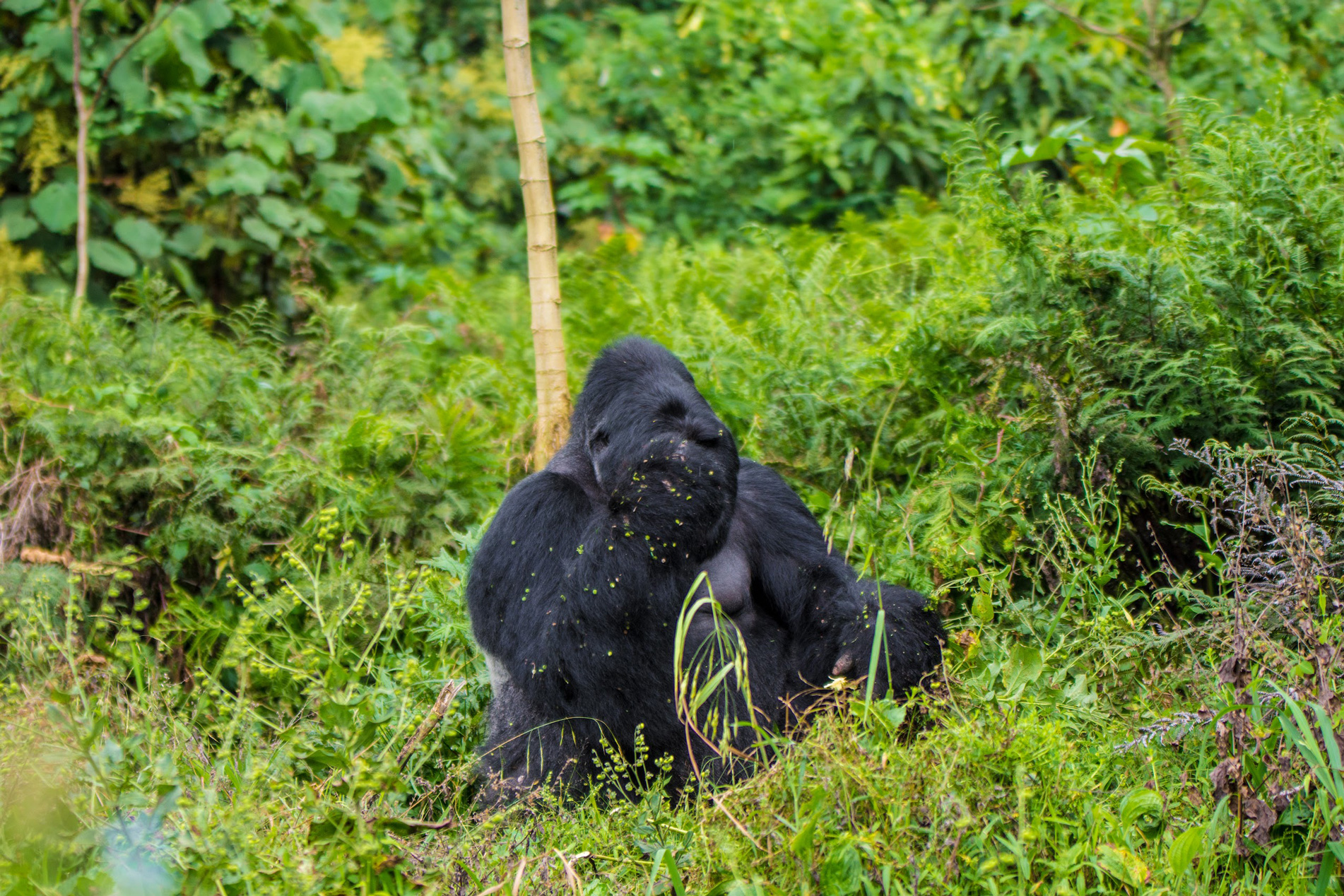
Mountain gorilla trekking is one of the main reasons travellers visit Mgahinga.
The park protects part of the habitat of the endangered mountain gorilla (Gorilla beringei beringei), a powerful and highly social primate found only in the mountain forests of this region of Africa.
Mountain gorillas live in family groups, usually led by a dominant silverback.
The family structure may include adult females, younger males, juveniles and infants.
Much of their day is spent feeding on vegetation, moving through the forest, resting and interacting with one another.
Watching these animals in their natural habitat provides an opportunity to appreciate their behaviour and the importance of protecting the mountain ecosystems they depend on.
The Nyakagezi Gorilla Family
Mgahinga is particularly associated with the Nyakagezi gorilla family, the park's established habituated group for tourist trekking.
The family is known for its history of movements within the Virunga landscape, although it has spent extended periods within Mgahinga in recent years.
Because gorilla groups are wild and their composition can change, visitors should not rely on fixed figures for the number of silverbacks, females or young gorillas in the family.
The Uganda Wildlife Authority manages trekking arrangements and confirms permit availability according to current conditions.
What Is Gorilla Trekking Like in Mgahinga?
A typical gorilla trekking day begins with an early morning briefing at the designated park meeting point.
Rangers explain the rules of gorilla observation, safety requirements and what to expect during the trek.
Visitors then enter the forest with trained guides and trackers.
The route may pass through bamboo vegetation, mountain forest and steep volcanic terrain.
The length and difficulty of the trek depend on the gorillas' location, weather conditions and the route required to reach them.
Some treks may be relatively manageable, while others involve several hours of walking uphill through uneven or muddy terrain.
Once the gorilla family is located, visitors on a standard gorilla trek are permitted up to one hour observing the animals.
During this time, you may see gorillas feeding, grooming, resting or interacting with their young.
The encounter takes place under the supervision of Uganda Wildlife Authority rangers, and visitors must follow all viewing regulations.
How Difficult Is Gorilla Trekking in Mgahinga?
Gorilla trekking in Mgahinga can be physically demanding because of the park's elevation and volcanic terrain.
The trails may be steep, slippery or covered with vegetation.
Visitors should be prepared for changing weather, including rain and cool temperatures.
A reasonable level of fitness is recommended, although the difficulty of any individual trek cannot be predicted in advance.
Local porters may be available to help carry equipment and assist visitors along difficult sections.
Mgahinga Gorilla Trekking vs Bwindi: Which Is Better?
Travellers planning a Uganda gorilla safari often ask whether they should visit Mgahinga or Bwindi Impenetrable National Park.
Both parks offer the opportunity to encounter mountain gorillas in their natural habitat, but the overall experiences differ.
Gorilla Trekking in Mgahinga
Mgahinga is particularly attractive to travellers who enjoy mountain scenery, bamboo forests and the possibility of combining gorilla trekking with golden monkey tracking or volcano hiking.
Its smaller size and limited number of habituated gorilla groups create a different tourism setting from Bwindi.
The park's landscape is dominated by the Virunga volcanoes, giving many walks a distinctive mountain atmosphere.
Gorilla Trekking in Bwindi impenetrable National Park
Bwindi Impenetrable National Park is a much larger rainforest with several gorilla trekking sectors and numerous habituated gorilla families.
It offers a wider selection of trekking locations and accommodation areas.
Bwindi is also particularly important for forest birdwatching, including searches for Albertine Rift endemic species.
Which Park Should You Choose?
Mgahinga may be a good choice if you want to combine gorilla trekking with golden monkeys, volcano hiking and time around Kisoro.
Bwindi may be more suitable if you want a wider selection of gorilla trekking sectors, forest birding trails and accommodation options.
Neither park guarantees an easier trek or a better gorilla encounter.
The right choice depends on permit availability, travel plans, fitness, interests and preferred accommodation.
For travellers with sufficient time, visiting both parks can provide a broader understanding of Uganda's mountain gorilla habitats.
Golden Monkey Tracking in Mgahinga Gorilla National Park
Golden monkey tracking is one of Mgahinga's most distinctive wildlife experiences.
The golden monkey (Cercopithecus mitis kandti) is a colourful primate associated with the Virunga Mountains and surrounding highland forests.
Its golden-orange fur contrasts with darker markings on the face, arms and body, making it an attractive subject for wildlife photography.
Golden monkeys are active, social animals that often move in groups through bamboo vegetation.
They feed on bamboo shoots, leaves, fruits and other available plant material.
What Happens During Golden Monkey Tracking?
Golden monkey tracking usually begins with a briefing at the park's designated meeting point.
Visitors then enter the forest with a guide to search for a habituated group.
The walk often passes through bamboo forest, where the monkeys may be seen feeding, climbing or moving between trees.
Golden monkeys are generally more active and fast-moving than gorillas.
They may jump between branches, chase one another or feed while moving through the vegetation.
This makes the experience lively and particularly interesting for photographers.
The duration of the walk depends on the location of the monkeys and the terrain.
Standard viewing arrangements are subject to Uganda Wildlife Authority rules.
Golden Monkey Habituation Experience
Mgahinga may also offer specialised golden monkey habituation experiences under separate arrangements.
These activities are designed for visitors who want more time observing the monkeys and learning about their behaviour.
Availability, permitted observation time and fees should be confirmed before travel.
Is Golden Monkey Tracking Worth It?
Yes, particularly for visitors interested in primates, wildlife photography and Uganda's mountain ecosystems.
Golden monkey tracking provides a different experience from gorilla trekking.
While gorilla encounters are often quiet and focused on observing family behaviour, golden monkeys are energetic and frequently move through the bamboo canopy.
Combining both activities gives visitors the opportunity to observe two distinctive primates within the same protected landscape.
Birdwatching in Mgahinga Gorilla National Park
Mgahinga is an excellent destination for birdwatchers interested in high-altitude forest birds and species associated with the Albertine Rift.
More than 180 bird species have been recorded in the park, including several Albertine Rift endemics and mountain forest specialists.
Although the park is relatively small, its changing vegetation supports a variety of bird habitats.
These include montane forest, bamboo, forest edges, heath vegetation and higher-altitude slopes.
Birdwatching here requires patience and careful listening because many forest birds remain concealed within vegetation.
A knowledgeable birding guide can help identify calls and locate species that might otherwise be missed.
Rwenzori Turaco
The Rwenzori Turaco is one of the most attractive birds associated with the Albertine Rift mountains.
Its green and blue plumage, distinctive crest and red flight feathers make it a rewarding species to observe.
The bird is associated with montane forest habitats and may be seen moving through the canopy.
Regal Sunbird
The Regal Sunbird is another colourful Albertine Rift species.
The male displays striking iridescent colours, while females have more subdued plumage.
These birds may be encountered around flowering vegetation in suitable mountain habitats.
Rwenzori Batis
The Rwenzori Batis is a small forest bird associated with the Albertine Rift highlands.
It is often observed moving through branches and searching for insects.
Its distinctive calls can help birding guides locate it within dense vegetation.
Dusky Crimsonwing
The Dusky Crimsonwing is a sought-after bird associated with highland forest undergrowth.
Its secretive behaviour can make it difficult to observe.
Patient birdwatchers may have opportunities to search for this species in suitable habitat.
Handsome Francolin
The Handsome Francolin is a distinctive bird associated with montane forest and forest-edge habitats.
It is often heard before being seen, and its calls can help experienced guides identify its presence.
Other Birds to Look For in Mgahinga
Birdwatchers may also search for: Rwenzori Double-collared Sunbird, Blue-headed Sunbird, Kivu Ground Thrush, Red-faced Woodland Warbler, Mountain Masked Apalis, Stripe-breasted Tit, Archer's Robin-Chat, Olive Woodpecker, Cinnamon Bracken Warbler, White-starred Robin, Mountain Yellow Warbler, Black-headed Waxbill and Various forest flycatchers, sunbirds and raptors
Some species are uncommon, localised or difficult to detect.
The birds encountered depend on altitude, vegetation, season and the time available for birdwatching.
Dedicated birders should allow sufficient time for slow, guided walks rather than treating birdwatching as a brief activity between other excursions.
Best Birdwatching Areas in Mgahinga
The Gorge Trail
The Gorge Trail is one of Mgahinga's best-known birdwatching routes.
It passes through varied mountain vegetation and provides opportunities to search for forest birds and Albertine Rift species.
The route follows sections of the landscape between the volcanic slopes, with views of surrounding mountain scenery.
Birdwatchers may encounter turacos, sunbirds, forest warblers and other highland species.
Bamboo Forest Habitats
Bamboo vegetation is particularly important for golden monkeys, but it also supports a variety of birds.
Birdwatching in these areas can be combined with nature walks or other park activities, depending on the route and guiding arrangements.
Montane Forest and Forest Edges
The park's forested slopes and edges provide opportunities to observe highland birds.
These habitats are particularly interesting for visitors seeking sunbirds, turacos, flycatchers and other forest-associated species.
Higher-Altitude Vegetation
Visitors undertaking longer mountain hikes may pass through different vegetation zones.
These changes in habitat can provide opportunities to observe birds associated with higher elevations.
Weather conditions and the physical demands of the routes should be considered when planning birdwatching at altitude.
Hiking the Virunga Volcanoes in Mgahinga
Mgahinga is one of Uganda's leading destinations for volcano hiking.
The park protects the Ugandan slopes of three prominent Virunga volcanoes, each offering a different hiking experience.
These hikes are guided activities and should be arranged through the relevant park authorities.
Mount Sabyinyo – The Mountain of Three Countries
Mount Sabyinyo is one of the most distinctive volcanoes in the Virunga range.
Its name is commonly translated as "old man's teeth," referring to the jagged shape of its peaks.
The mountain lies at the meeting point of Uganda, Rwanda and the Democratic Republic of the Congo.
The summit area is famous for the geographical meeting of the three countries.
The hike is challenging, with steep sections, ladders and rugged mountain terrain.
It is best suited to physically fit hikers who are comfortable with demanding climbs and changing weather conditions.
Under suitable conditions, the summit provides dramatic views across the surrounding volcanic landscape.
Mount Gahinga – Bamboo Forest and Mountain Scenery
Mount Gahinga rises to approximately 3,474 metres.
Its slopes include bamboo forest and other mountain vegetation.
The hike is generally considered less demanding than Mount Sabyinyo, although it still requires fitness and preparation.
The summit area includes a crater landscape with vegetation shaped by the mountain's altitude and climate.
Mount Gahinga is a rewarding choice for visitors who want to experience the Virunga landscape without attempting the most demanding route.
Mount Muhabura – The Guide Mountain
Mount Muhabura, also written Muhavura, rises to approximately 4,127 metres and is the highest of the three volcanoes within Mgahinga's landscape.
Its name is commonly interpreted as "the guide," reflecting its prominent position in the surrounding region.
The hike is steep and physically demanding.
The mountain's slopes offer expansive views, and under clear conditions, hikers may see across parts of southwestern Uganda and neighbouring countries.
Near the summit is a small crater lake.
Because of the elevation and exposed terrain, hikers should prepare for cold temperatures, strong winds and rapid weather changes.
How Difficult Are the Volcano Hikes?
Volcano hiking in Mgahinga ranges from moderately demanding to very challenging.
The routes involve significant elevation changes, uneven ground and potentially slippery surfaces.
Mount Sabyinyo and Mount Muhabura are particularly strenuous.
Visitors should choose hikes according to their fitness, experience and available time.
Suitable hiking boots, warm clothing, rain protection, drinking water and guidance from experienced park rangers are essential.
The Batwa Trail Experience in Mgahinga
Mgahinga has an important cultural connection with the Batwa, an Indigenous community whose history is closely associated with the forests of the Virunga region.
The Batwa traditionally relied on forest resources and developed extensive knowledge of plants, wildlife and their environment.
The establishment of protected areas significantly changed their access to ancestral forest lands and traditional livelihoods.
Today, the Batwa Trail provides visitors with an opportunity to learn about aspects of Batwa cultural heritage through guided interpretation.
What Can Visitors Experience on the Batwa Trail?
Depending on the programme and current arrangements, the experience may include demonstrations of traditional forest knowledge, explanations of medicinal plants, cultural storytelling and visits to historically important sites.
One of the best-known features is Garama Cave, which has cultural significance in Batwa history.
The experience offers a different perspective on Mgahinga, highlighting the relationship between people, forests and conservation.
Visitors should choose community-led experiences that respect Batwa voices, provide fair compensation and avoid presenting living cultures as tourist displays.
Other Wildlife Found in Mgahinga Gorilla National Park
Although gorillas and golden monkeys are the park's best-known mammals, Mgahinga supports other wildlife.
Forest Buffaloes
Buffaloes occur in the park's forest and mountain habitats.
They are powerful animals and can be dangerous when disturbed, so visitors should follow ranger instructions.
Forest Elephants
Elephants may move through parts of the Virunga landscape, although encounters within Mgahinga are uncommon.
Smaller Mammals
The park supports smaller mammals and other forest wildlife, including various rodents and carnivores.
Many are difficult to observe because of their behaviour and the dense vegetation.
Reptiles, Amphibians and Butterflies
Mgahinga's mountain habitats also support reptiles, amphibians, butterflies and numerous invertebrates.
These species contribute to the park's biodiversity and ecological importance.
Best Time to Visit Mgahinga Gorilla National Park
Mgahinga can be visited throughout the year, although weather conditions affect trekking, hiking and birdwatching.
Because the park is mountainous, temperatures can be cool and rain can occur even during generally drier periods.
June to August
These months are generally among Uganda's drier periods.
Trails may be easier to navigate, making this a popular time for gorilla trekking and volcano hiking.
However, mountain weather remains unpredictable.
December to February
This is another generally drier period.
It can provide favourable conditions for trekking, golden monkey tracking and hiking.
Visitors should still carry rain protection and warm clothing.
March to May
Rainfall is often heavier during these months.
Trails may become muddy and slippery, and mountain visibility can be affected by clouds and mist.
The vegetation is particularly lush, creating attractive conditions for forest and landscape photography.
September to November
These months commonly bring increased rainfall.
Birdwatching and primate tracking remain possible, but visitors should prepare for wet conditions and potentially difficult trails.
When Is the Best Time for Gorilla Trekking?
The generally drier months are often preferred because walking conditions may be easier.
However, gorilla trekking takes place throughout the year, subject to park operations and permit availability.
No particular month guarantees a shorter trek or a better gorilla encounter.
How to Get to Mgahinga Gorilla National Park
By Road from Kampala or Entebbe
Mgahinga can be reached by road from Kampala or Entebbe through southwestern Uganda.
The journey commonly takes approximately nine to eleven hours or longer, depending on traffic, road conditions and stops.
Travellers normally pass through the Kabale or Kisoro region before reaching the park.
Because the drive is long, visitors may prefer to include an overnight stop or arrange a domestic flight.
By Domestic Flight
Domestic flights may be available from Entebbe to Kisoro Airstrip, subject to airline schedules and operating conditions.
From Kisoro, visitors continue by road to their accommodation or the park's main activity starting point.
From Kigali, Rwanda
Mgahinga is relatively accessible from Kigali through the Uganda–Rwanda border crossings.
This option may be convenient for travellers arriving in Rwanda or combining destinations in both countries.
Visitors should check visa requirements, border procedures and current travel arrangements before departure.
From Bwindi Impenetrable National Park
Mgahinga can be combined with southern Bwindi, particularly the Rushaga and Nkuringo areas.
Travel time depends on the route, accommodation location and road conditions.
Visitors should avoid assuming that all Bwindi sectors are equally close to Mgahinga.
Gorilla Trekking Permits and Park Fees
A valid gorilla trekking permit is required for visitors who want to track mountain gorillas in Mgahinga.
Permits are managed through the Uganda Wildlife Authority and are subject to availability.
The standard gorilla trekking experience allows up to one hour with the assigned gorilla family once it is located.
The minimum age for standard gorilla trekking in Uganda is 15 years.
Under the Uganda Wildlife Authority tariff introduced in July 2024, the standard permit for foreign non-residents was listed at USD 800.
Permit prices may change, and visitors should confirm the current rate and availability before making travel arrangements.
Golden monkey tracking, volcano hiking, birdwatching and other park activities have separate fees and arrangements.
For visitors planning multiple activities, it is advisable to confirm which fees are included in their safari package.
Where to Stay When Visiting Mgahinga
Accommodation for Mgahinga visitors is available around the park, Kisoro town and nearby scenic areas.
The best location depends on your planned activities, budget and preferred level of comfort.
Lodges Near Ntebeko and the Park Boundary
Accommodation close to the park can be convenient for early morning gorilla trekking, golden monkey tracking and volcano hikes.
Staying nearby reduces travel time to the activity briefing point.
Accommodation Around Kisoro
Kisoro town offers guesthouses, hotels and other accommodation options.
It is a practical base for travellers who want access to local services and transport connections.
Lake Mutanda Area
Lake Mutanda is a scenic destination surrounded by hills and views of the Virunga volcanoes.
Accommodation around the lake can provide a peaceful setting before or after visiting Mgahinga.
However, visitors should account for the road transfer required to reach the park's activity starting point.
Choosing the Right Accommodation
When selecting accommodation, consider:
- Distance to the Ntebeko briefing point.
- Road access and transfer time.
- Your planned trekking or hiking activities.
- Preferred accommodation standard.
- Availability of meals and packed lunches.
- Whether you are combining Mgahinga with Bwindi or other destinations.
For early morning activities, staying within a practical driving distance of the park is particularly important.
How Many Days Do You Need in Mgahinga?
One Day
A one-day visit may be sufficient for a single activity, such as golden monkey tracking or a guided nature walk, if you are already staying nearby.
However, long-distance travel from Kampala or Entebbe makes a same-day visit impractical.
Two Days
Two days can allow time for one major park activity and some additional sightseeing, depending on arrival and departure arrangements.
Three Days
Three days is a good starting point for travellers who want to combine gorilla trekking and golden monkey tracking.
A typical visit might include arrival on the first day, gorilla trekking on the second and golden monkey tracking before continuing to another destination, although the schedule should be adapted to activity start times.
Four to Five Days
A longer stay is recommended for visitors who want to include volcano hiking, specialist birdwatching, cultural experiences and photography.
Dedicated birdwatchers may particularly benefit from additional time to explore different habitats.
Wildlife Photography in Mgahinga
Mgahinga offers interesting photographic opportunities because of its combination of primates, bamboo forest, mountain landscapes and changing light.
Gorilla Photography
Photographing gorillas requires patience and an understanding of low-light forest conditions.
A camera that performs well at higher ISO settings can be useful.
Flash photography is prohibited during gorilla trekking.
Golden Monkey Photography
Golden monkeys are active and often move quickly through bamboo vegetation.
A fast shutter speed and suitable telephoto lens can help capture their movements.
Photographers should remain at the required viewing distance and follow guide instructions.
Landscape Photography
The Virunga volcanoes provide dramatic subjects, particularly during clear mornings and periods when mist moves across the slopes.
Lake Mutanda and the surrounding highlands can also provide attractive landscape compositions.
Bird Photography
Mgahinga's forest birds can be challenging to photograph because of dense vegetation and changing light.
A patient approach, good knowledge of bird behaviour and the assistance of an experienced birding guide can improve photographic opportunities.
What to Pack for Mgahinga Gorilla National Park
Mgahinga's mountain environment requires more preparation than a typical lowland wildlife safari.
Useful items include:
- Waterproof hiking boots with good grip.
- Warm layers for cool mornings and higher elevations.
- A waterproof jacket.
- Long trousers and long-sleeved clothing.
- Trekking gloves.
- A small daypack.
- Drinking water and energy snacks.
- Binoculars for birdwatching.
- A camera and protective equipment.
- Sunscreen and a hat.
- Personal medication.
- A walking stick where appropriate.
For volcano hikes, additional warm clothing and adequate water are especially important.
Visitors should discuss the physical demands of their planned activities with their safari operator before travelling.
Conservation and the Importance of Mgahinga
Mgahinga is an important part of the wider Virunga conservation landscape.
Its forests and mountain habitats support endangered primates, rare birds and numerous other species.
The park's ecological importance extends beyond Uganda's borders because wildlife and habitats are connected across the Virunga Massif.
Conservation Challenges
Like other protected mountain ecosystems, Mgahinga faces pressures associated with land use, human–wildlife interactions, disease risks and the needs of surrounding communities.
The limited size of the park makes effective habitat protection particularly important.
The Role of Tourism
Regulated gorilla trekking, golden monkey tracking and other visitor activities generate revenue that can contribute to conservation and local economic opportunities.
Tourism also creates employment for guides, porters, accommodation providers and other service businesses.
Visitors can support responsible conservation by following park regulations, respecting wildlife-viewing distances and choosing operators that value local communities and environmental protection.
Combining Mgahinga with Other Uganda Safari Destinations
Mgahinga is particularly suitable for inclusion in a broader safari through southwestern Uganda.
Mgahinga and Bwindi Impenetrable National Park
Combining Mgahinga with Bwindi allows travellers to experience two different mountain forest environments.
Bwindi is known for its extensive rainforest, gorilla trekking sectors and specialist forest birdwatching.
Mgahinga adds golden monkeys, volcano hiking and the scenery of the Virunga Mountains.
Mgahinga and Lake Mutanda
Lake Mutanda offers beautiful mountain scenery and a peaceful setting near Kisoro.
It can be a good place to relax after trekking or hiking activities.
Mgahinga and Lake Bunyonyi
Lake Bunyonyi is another scenic highland destination in southwestern Uganda.
Its islands, surrounding hills and quiet atmosphere make it a popular addition to Uganda safari itineraries.
Mgahinga and Queen Elizabeth National Park
Queen Elizabeth National Park provides a contrast to Mgahinga's mountain habitats.
Visitors can combine primate experiences with savannah game drives, boat excursions and wildlife viewing.
Mgahinga and Mabamba Swamp
For travellers interested in both primates and birds, Mgahinga can be combined with shoebill watching at Mabamba Swamp near Entebbe.
This itinerary brings together golden monkeys, mountain gorillas, highland forest birds and the distinctive wetland habitats of Lake Victoria.
Frequently Asked Questions About Mgahinga Gorilla National Park
Where is Mgahinga Gorilla National Park located?
Mgahinga is located in Kisoro District in southwestern Uganda, near the borders with Rwanda and the Democratic Republic of the Congo.
What is Mgahinga Gorilla National Park famous for?
The park is famous for mountain gorilla trekking, golden monkey tracking, volcano hiking and its location within the Virunga Mountains.
Can you see mountain gorillas in Mgahinga?
Yes. Mgahinga offers guided mountain gorilla trekking through the Uganda Wildlife Authority, subject to permit availability and current park arrangements.
Is Mgahinga better than Bwindi for gorilla trekking?
Both parks offer rewarding gorilla trekking experiences. Mgahinga is particularly attractive for its volcanic scenery and golden monkeys, while Bwindi offers more trekking sectors and extensive rainforest habitats.
Can you see golden monkeys in Mgahinga?
Yes. Mgahinga is one of Uganda's principal destinations for guided golden monkey tracking.
How many days should I spend in Mgahinga?
Three days is a useful starting point for visitors combining gorilla trekking and golden monkey tracking. Longer stays allow time for birdwatching, volcano hiking and cultural experiences.
What is the best time to visit Mgahinga?
The generally drier periods from June to August and December to February are often preferred for trekking and hiking, although the park can be visited throughout the year.
Is Mgahinga good for birdwatching?
Yes. The park supports highland forest birds and several Albertine Rift endemic species, making it an interesting destination for specialist birdwatchers.
Can I hike the volcanoes in Mgahinga?
Yes. Guided hikes are available on Mount Sabyinyo, Mount Gahinga and Mount Muhabura, subject to park conditions and activity arrangements.
Is gorilla trekking in Mgahinga difficult?
The difficulty varies according to the gorillas' location, weather and terrain. Some treks involve steep volcanic slopes and several hours of walking.
Can I visit Mgahinga from Kigali?
Yes. Mgahinga can be reached from Kigali through the Uganda–Rwanda border crossings, subject to immigration and travel requirements.
Is Mgahinga suitable for wildlife photography?
Yes. The park offers opportunities to photograph mountain gorillas, golden monkeys, forest birds and the Virunga volcanic landscape.
Mgahinga Gorilla Trekking and Birding Safari with Shoebill Watch
Mgahinga Gorilla National Park may be small, but it offers an impressive range of wildlife and mountain experiences.
From observing mountain gorillas in the forest to following golden monkeys through bamboo vegetation and hiking the slopes of the Virunga volcanoes, the park reveals a different side of Uganda's natural beauty.
For birdwatchers, its Albertine Rift habitats add further interest, while the surrounding highlands offer opportunities for nature photography and scenic travel.
At Shoebill Watch, we help travellers plan private Uganda gorilla trekking, golden monkey tracking, birdwatching and wildlife safaris.
Your itinerary can focus on Mgahinga or combine the park with Bwindi Impenetrable National Park, Mabamba Swamp, Queen Elizabeth National Park and other destinations.